
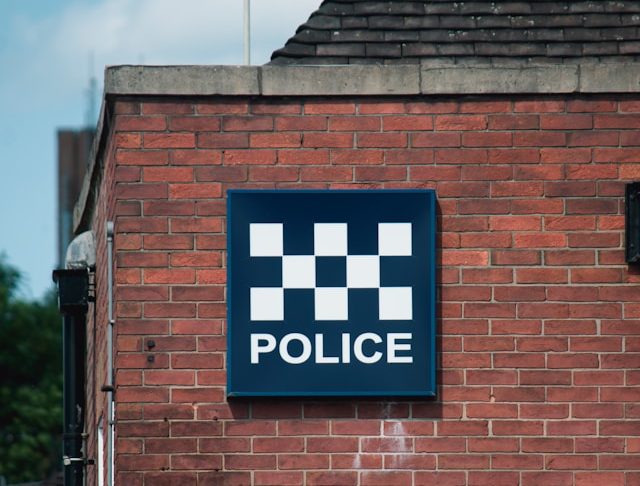
A phone call from the police, or an officer arriving at your door, changes the shape of your day instantly. Your mind immediately starts racing: should you answer their questions, should you go with them, or should you say nothing at all?
At Ridge Legal, the calls we receive most often start the exact same way: “Police just asked me to come in for an interview, what do I do?” How you answer that question can dictate the entire trajectory of a criminal case.
This guide explains your police interview rights in New South Wales. We focus on the practical realities of what happens, moment by moment, and how to protect yourself before you walk into a police station.
What happens the moment police make contact
The first thing to establish is your actual legal status. Are you under arrest, or has an officer simply asked you to help with an inquiry? They sound similar, but legally, they are entirely different.
Arrested versus asked to assist police in NSW
If you are arrested, police have determined they have lawful grounds to detain you. You are not free to leave. From that point, strict rules under the Law Enforcement (Powers and Responsibilities) Act 2002 (LEPRA) govern how long they can hold you for questioning, when they must issue a caution, and when they must allow you to contact a lawyer.
Being asked to “assist police with their inquiries” or to “come in for a chat” is a different matter. You have not been arrested. You are attending voluntarily, which means you do not have to go, and you can leave at any time—unless the police formally place you under arrest.
Police may frame a voluntary invitation as routine or low-key. It rarely is. A voluntary interview can produce the exact same recorded admissions used to arrest and charge you later.
Do I have to talk to police in NSW?
This is the most common question clients ask. The answer depends on what is being asked, and the legal context of the request.
In NSW, police have specific powers to demand your name and address. You generally must provide your identity if you are the driver of a vehicle, if you are given a lawful “move-on” direction, or if police reasonably suspect you can assist in the investigation of an indictable (serious) offence.
Beyond confirming your identity in these specific circumstances, you are not legally required to answer police questions.
The right to silence in NSW
The right to silence is a fundamental protection in the NSW criminal justice system. It means you can decline to answer police questions about an alleged offence, and your refusal to answer is not a crime.
Many people mistakenly assume that staying quiet makes them look guilty. It does not. The right to silence is a legal protection designed to prevent people from accidentally making admissions under pressure.
Can police force you to answer questions?
Police cannot force you to answer substantive questions about an alleged offence. They can ask, press, and repeat the question in different ways—that is a standard interview technique. However, repeating a question does not create a legal obligation for you to answer it.
Understanding the caution and the “special caution”
Before questioning you as a suspect, police must issue a caution. It sounds like a formality, but it has strict legal consequences.
What the standard caution means
The standard caution states that you do not have to say or do anything, but anything you do say or do may be used in evidence. In plain terms: you have a choice to remain silent, and if you waive that right, the recording will be played in a courtroom.
Under section 89 of the Evidence Act 1995 (NSW), a court generally cannot draw an adverse inference simply because you chose to exercise your right to silence.
The “special caution” and why your lawyer won’t sit in the interview
There is a critical nuance in NSW law that trips up many people. Under section 89A of the Evidence Act, police can issue a “special caution” for serious indictable offences. This caution warns that if you fail to mention a fact during the interview that you later rely on at trial, the court can draw an unfavourable inference against you.
However, there is a catch: this special caution can only be given, and used against you, if your lawyer is physically present with you at the police station.
This is the exact reason why experienced NSW criminal defence lawyers will advise you over the phone, but will generally refuse to sit next to you in the interview room. By not being physically present, your lawyer prevents the police from using the section 89A special caution, thereby fully protecting your right to silence.
What police can and cannot do during an interview
Once you are in an interview room, officers are trained to build rapport, apply pressure, and use strategic techniques to elicit information.
Can police bluff during an interview?
Within certain limits, yes. Police may legally imply they hold more evidence than they actually do. They might suggest they have CCTV footage, that witnesses have provided statements, or that a co-accused has already implicated you. This is a standard investigative tactic designed to provoke a reaction or a confession.
Because of this, nothing said in an interview room is truly “off the record.” If you try to outsmart the police or explain your way out of the situation without legal advice, you are highly likely to say something that harms your defence.
What to say to police
You do not need a rehearsed legal script. Provide your name and address if legally required, and then state clearly:
“I have received legal advice. I do not wish to participate in an interview or answer any questions.”
You can repeat this phrase as many times as necessary. You do not need to justify, explain, or soften your refusal. Politely declining to answer questions is a lawful choice.
Why calling a lawyer first is critical
The outcome of a police interview is rarely decided by what happens inside the room; it is decided by the advice you receive before you get there.
If you are attending voluntarily and decline to answer questions, the police may still choose to charge you based on the evidence they already hold. Refusing an interview does not necessarily stop an investigation, but it does stop you from inadvertently handing the prosecution the evidence they need to convict you.
If police have contacted you, the safest first move is to call a lawyer. Ridge Legal provides strategic criminal defence advice to clients across the Shoalhaven, the Illawarra, and regional NSW. A brief, urgent consultation can clarify whether you need to attend the station, what you are required to say, and how to protect your rights.
Before you agree to a time, and before you answer a single substantive question, contact Ridge Legal for clear, practical advice.
Disclaimer: The information in this article is general in nature and does not constitute formal legal advice. Criminal law and police powers are complex and subject to change. If you have been contacted by police, please contact Ridge Legal immediately for advice tailored to your specific circumstances.